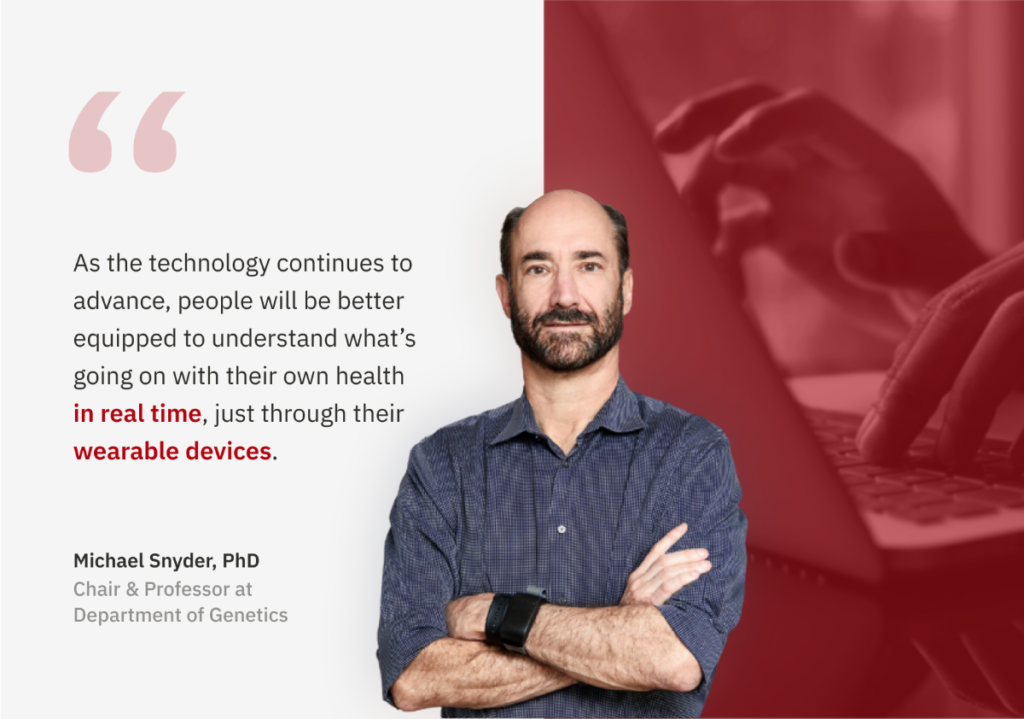
“We all have habits that have unhealthy things in our routines, and glucose monitoring helps people pay attention to it.”
As one of the most extensively monitored scientists, Dr. Michael Snyder exchanges fascinating stories with Dr. Rhonda Patrick (FoundMyFitness) about the personalized insights people learned about their health from continuous glucose monitoring.
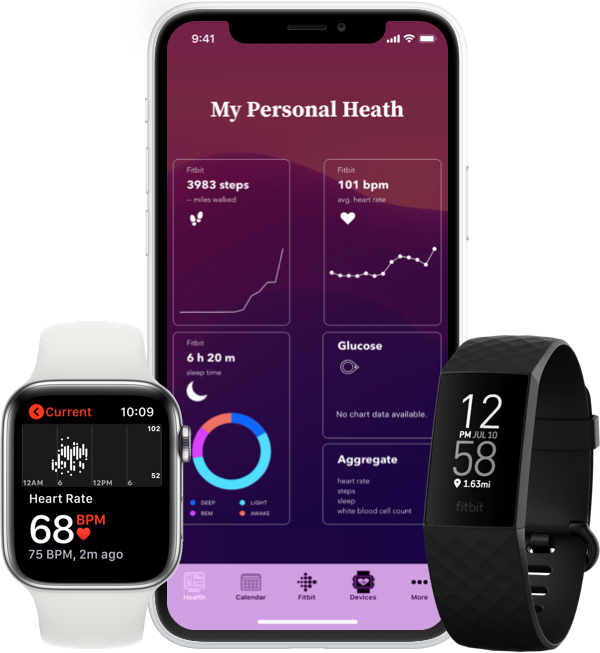
For example, the vinaigrette dressing in a perfectly healthy salmon salad may be the cause for a person’s glucose level to spike. Exercises, even a walk for as short as 15 minutes, could suppress a person’s glucose level after consuming a specific type of food that induces the glucose level spike. Continuous glucose monitoring allows people to gain personalized insights about how lifestyle impacts their health.
Longitudinal multi-omic baseline profiling & individual health profiles
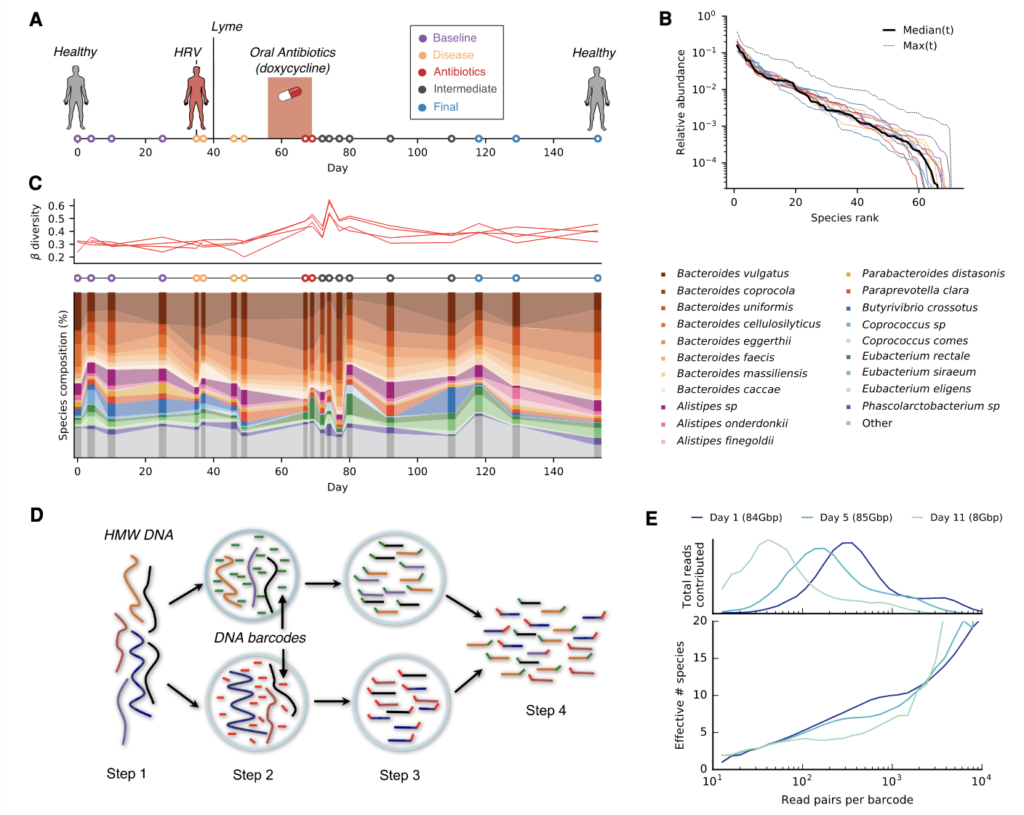
These personalized insights are not just anecdotal. Dr. Snyder is a pioneer of a biomedicine research approach, called longitudinal multi-omic baseline profiling. By monitoring a person’s molecular changes across a variety of omic domains over time, Dr. Snyder’s research team is able to gain a holistic and granular picture of the person’s health profile. What’s surprising is that each person’s health profile is vastly different. In fact, one person’s health profile is more similar to themselves when they are sick than to another person.
Supplementing the current healthcare system with preventive medicine
This finding can change how diseases are diagnosed. In conventional medicine, we are told we are sick when our health profile diverts from the population average of what is considered healthy. Dr. Snyder’s research shows, due to the wide individual differences, it makes more sense to compare a person’s current health profile to their own baseline healthy state than to the average healthy state of a population. In a longitudinal study with 109 study participants, Dr. Snyder’s research team is able to detect diseases, such as cancer, pre-cancer, and diabetes, before study participants receive diagnosis. This kind of health insight, if gained early enough, would empower people to change their lifestyles to shift the disease trajectory. The same research team is currently recruiting participants to understand the long-term health effect of dietary fiber supplementation.
Dr. Snyder asked during the podcast, “Guess what the puzzle looks like when you only have 5 pieces of the puzzle?” This could be what our health looks like through the lens of conventional medicine – limited health metrics are taken into consideration a few times a year. We will understand so much more about our health, and how it is changing as we make more diverse measurements over time. Dr. Snyder’s team is currently recruiting study participants for a series of studies, ranging from individual’s different responses to COVID-19 vaccines to environmental exposures’ impact on Crohn’s disease.
Check out the full podcast on Youtube.
Other related podcasts and webinars
- Sign up to access webinar recording: The Shrinking Distance between Human and Machine: Computing Where We End and the Technologies Begin. by Science/AAAS and Tianqiao and Chrissy Chen Institute
- Michael Snyder on Using Data to Keep People Healthy by Harry Glorikian at Moneyball Medicine Podcast
- Big Data and Our Health: Precision Health by Bradford Cooper of Catalyst Coaching Institute