
Stanford University is conducting a research study to explore the potential health benefits of regular exposure to compounds extracted from plants. I spoke with researcher Jenny Kim, who is conducting this study and she shared her journey and passion for this unique study.
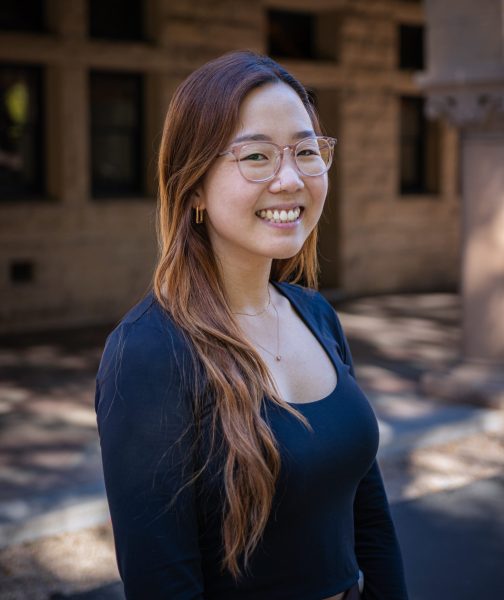
“My background was actually in mechanical engineering,” Kim said. “I worked a bit as a mechanical engineer, but I knew that I always wanted to build something, and that’s mostly what led me to pursue mechanical engineering. And when I started working, I realized that I have a passion that I want to pursue.”
Her personal journey led her to pursue biomedical engineering, where she became fascinated with wearables and personalized medicine. This brought her to be a researcher in Snyder Lab to conduct the Beneficial Exposures study.
“The main goal is to show the benefits of natural plant compounds,” Kim said. “I was born in South Korea and we grew up using traditional medicine. Western science focuses a lot on synthesized chemical compounds such as drugs, and a lot of them have a lot of side effects, but natural compounds have less of these side effects and provide similar benefits.”
According to Kim, selecting compounds to use for the study proved to be a delicate task as it is paramount to minimize risks for the human participants, such as allergies.
“The first oil that we chose is the Hinoki cypress oil,” Kim said. “It originates from this practice in Japan called forest bathing…and their main population of trees was Hinoki cypress trees. There are studies that show benefits from this population of trees.”
Despite the first oil being a fairly obvious choice, finding the second oil was a challenge.

“I wanted to try eucalyptus because it has different effects than Hinoki cypress, but a lot of people are allergic to eucalyptus,” Kim said. “In Costa Rica, I met this lady who practices holistic medicine and she had a lot of essential oils in her backpack. She recommended lemon oil because it is known to improve your mood and lower your stress, and not a lot of people are allergic to lemon.”
With hopes of discovering answers that have not yet been explored, Kim said she is excited to continue this study and show the world the benefits of using natural medicine.
“I hope people will be able to start leveraging natural compounds to help them feel better, have better sleep, and have better moods.”
For more information on this study or to sign up to participate, visit the Snyder Lab website to learn more.
This scientific article was written by Allison Ma, a. student intern in the Stanford Genetics Department.