Electrolytes are often overlooked, yet crucial to maintaining homeostasis. A 2013 study published in The American Journal of Medicine found that 15% of the populace 55 years and older are unaware that they have at least one electrolyte imbalance [1]. These imbalances are usually detected during routine blood tests or hospitalization but as a preventive measure can be identified earlier with adequate monitoring devices.
What are electrolytes?
Electrolytes are ions (atoms that have a positive or negative charge) dissolved in bodily fluids. Sodium (Na+) and potassium (K+) ions are two of many electrolytes which allow the nervous system to function properly, whereas calcium(Ca+) and magnesium(Mg+) are vital to cardiac function. Since electrolytes also help maintain the pH balance of bodily fluids, their measurements are widely used as a diagnostic tool. Certain conditions like cirrhosis, heart failure, kidney disease, and alcohol abuse put people at risk of electrolyte imbalances [1, 2].
To maintain a healthy electrolyte balance, a healthy diet is a necessity. However, the Emmy-winning correspondent for CBS News Sunday Morning, David Pogue has a unique method of ingesting electrolytes.
How to measure electrolytes
The gold standard for electrolyte concentrations in the body is blood testing [3]. Urine can also be utilized as a diagnostic marker for electrolyte imbalances [4]. Sweat tests are used for athletes, measuring sodium and chloride (Cl–) excreted during exercise [5]. However, according to a study published in the European Journal of Applied Physiology, the electrolyte composition of sweat is largely independent compared to that of the blood [6]. Therefore, sweat tests are an inaccurate measure of blood electrolytes.
There are two prominent methods of measuring electrolytes. One is by using an ion-selective electrode, and another is flame photometry.
An ion selective electrode converts the amount of ions in a solution to an electric potential [7]. Ion Selective Electrodes (ISEs) are commonly made of different selectors. For example, some ISEs are made with enzymes – some of which enable glucose monitoring. Others use polymer membranes, which are used to measure potassium, calcium, and nitrate. Yet others are crystalline or solid-state electrodes, used to measure chloride and fluoride. Finally, some have a membrane made of glass, commonly used to measure sodium levels [8]. Ion-Selective electrodes have been widely utilized in hospitals [9, 10].
Flame photometry uses the spectroscopic emissions of a chemical exposed to excitation energy from a flame [11]. Current results from equipment using ISEs are comparable to those from flame photometry [12].

A diagram of a flame photometer. Image credit to studyandscore.com.
Ion Selective Electrodes
An ion-selective electrode is composed of a membrane, reference solution, and other electrodes. The membrane has a very high degree of selectivity and does not dissolve in the analyte (in this case, blood). Therefore, multiple electrodes will be required to measure the requisite electrolytes in the blood. Each ISE will have a reference solution containing a known concentration of the electrolyte which will be measured in the blood. The voltage difference between the reference solution and the analyte will measure the concentration of electrolyte in the analyte. [7]
Image below displays a diagram of an ion-selective electrode.

Image below shows an actual ion-selective electrode.
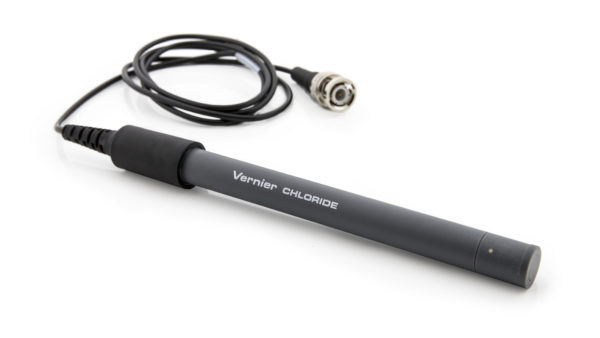
Image credit to Chem.libretexts.org
Credit to Vernier.com
Current electrolyte analyzers in hospitals are rather bulky and expensive [13]. One of the analyzers named the Roche 9180 [14] is comparable to the size of a printer [15] and costs approximately $10,000 [16]. Home-based devices are inexpensive and convenient but inaccurate. For instance, Elosia [17] (a company that makes urine testing strips for electrolytes) states on its website that the urine testing strips can be used to “give a rough idea of the situation.”
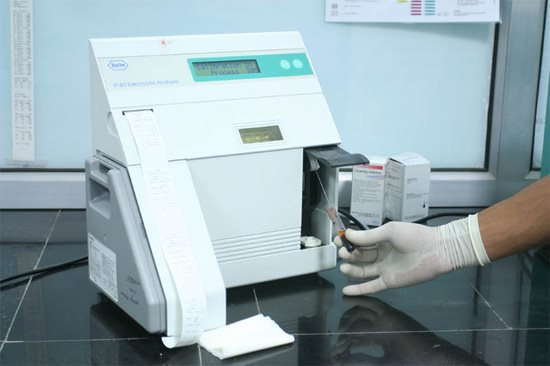
A Roche 9180 electrolyte analyzer. Image credit to Adria Med.
Commercially available at-home glucose monitors use pinpricks to obtain the patient’s blood for analysis. With advancements in the miniaturization of technology, it may be possible to add an electrolyte testing kit to these at-home glucose monitors. Recently, researchers at the Norwegian Institute of Science and Technology suggested mid-infrared laser spectroscopy of peritoneal fluids to determine glucose concentrations in the blood [18]. Perhaps this method could also be used to monitor electrolytes continuously.
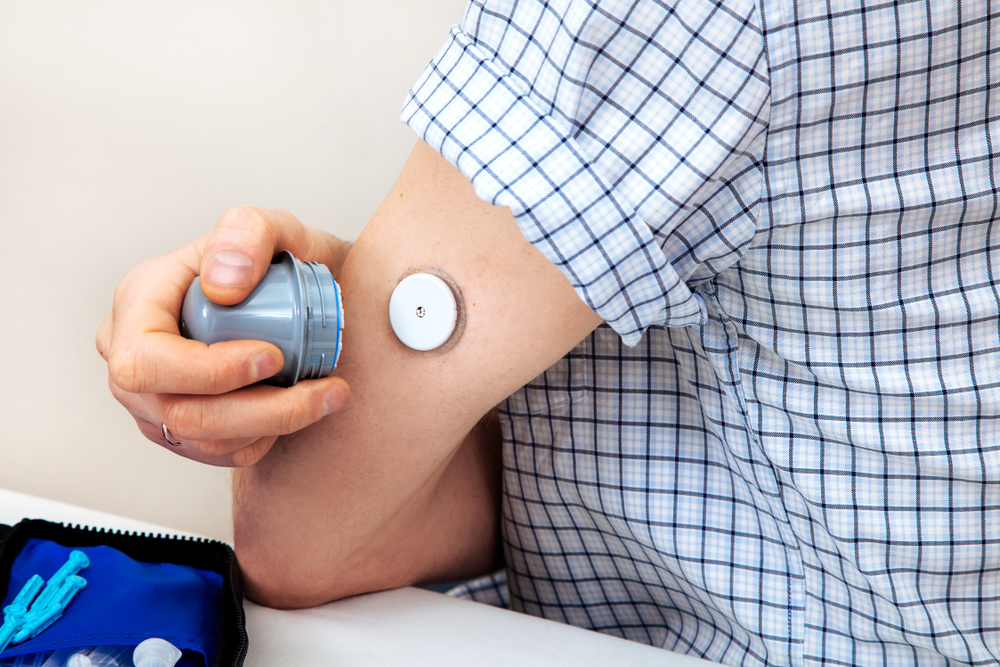
A subcutaneous glucose monitor. Image credit to health.wyo.gov.
Symptoms of disease, morbidity, and mortality can be exacerbated due to an electrolyte imbalance [19]. By creating an at-home early warning system, it is possible to mitigate the severity.
This scientific post was contributed by Stanford Healthcare Innovation Lab team member Shourish Mukherjee.
Shourish Mukherjee is a junior at Monta Vista High School in Cupertino, California. He is fascinated with biology because of how applicable the concepts are to our everyday lives and because there is still so much to discover. As a biology enthusiast wanting to pursue a career in medicine, Shourish was excited to participate in a summer workshop at the Stanford Healthcare Innovation Lab, which allowed him to “get a glimpse into the future of medicine.”
Outside of being passionate about biology, Shourish plays the trumpet. He hopes to try llapingachos (stuffed potato patties) from Ecuador in the future. You can also check out his YouTube channel here.